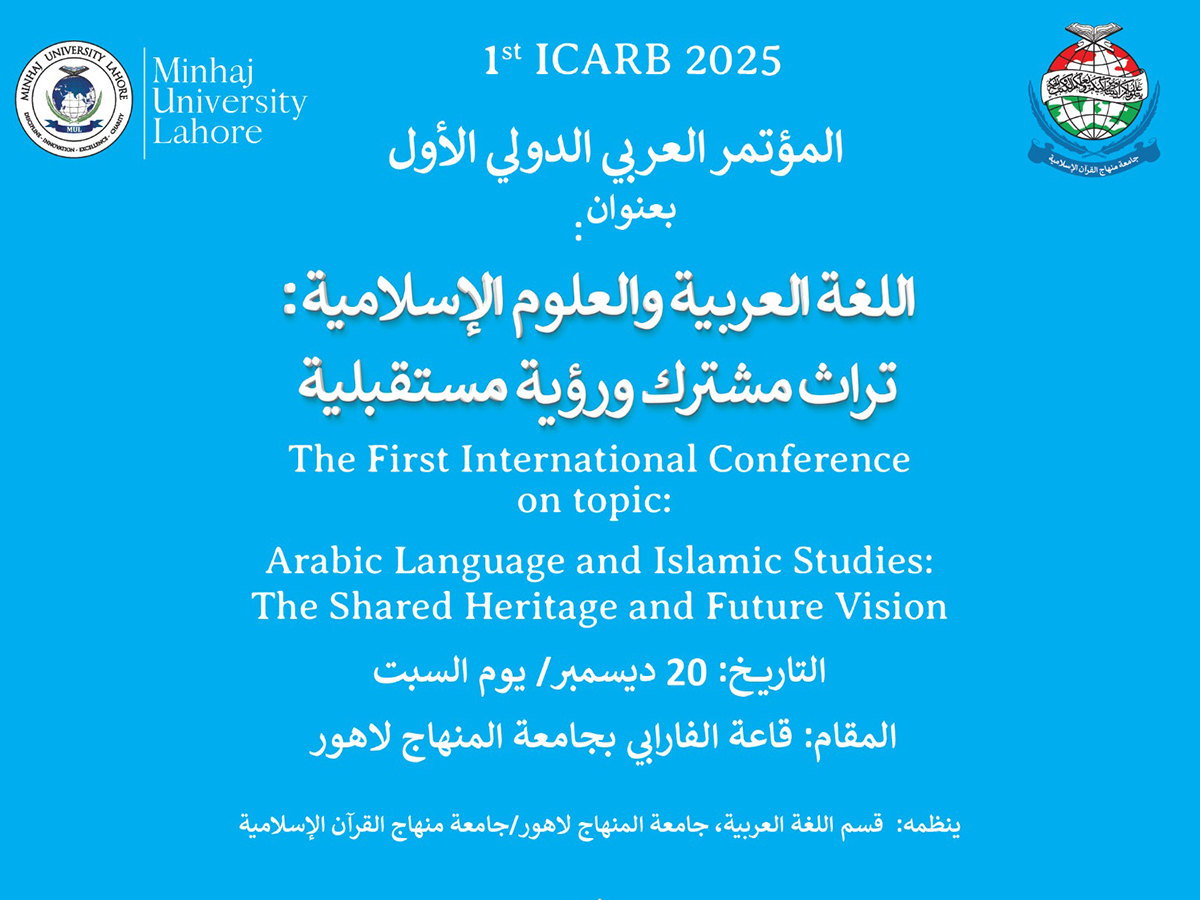
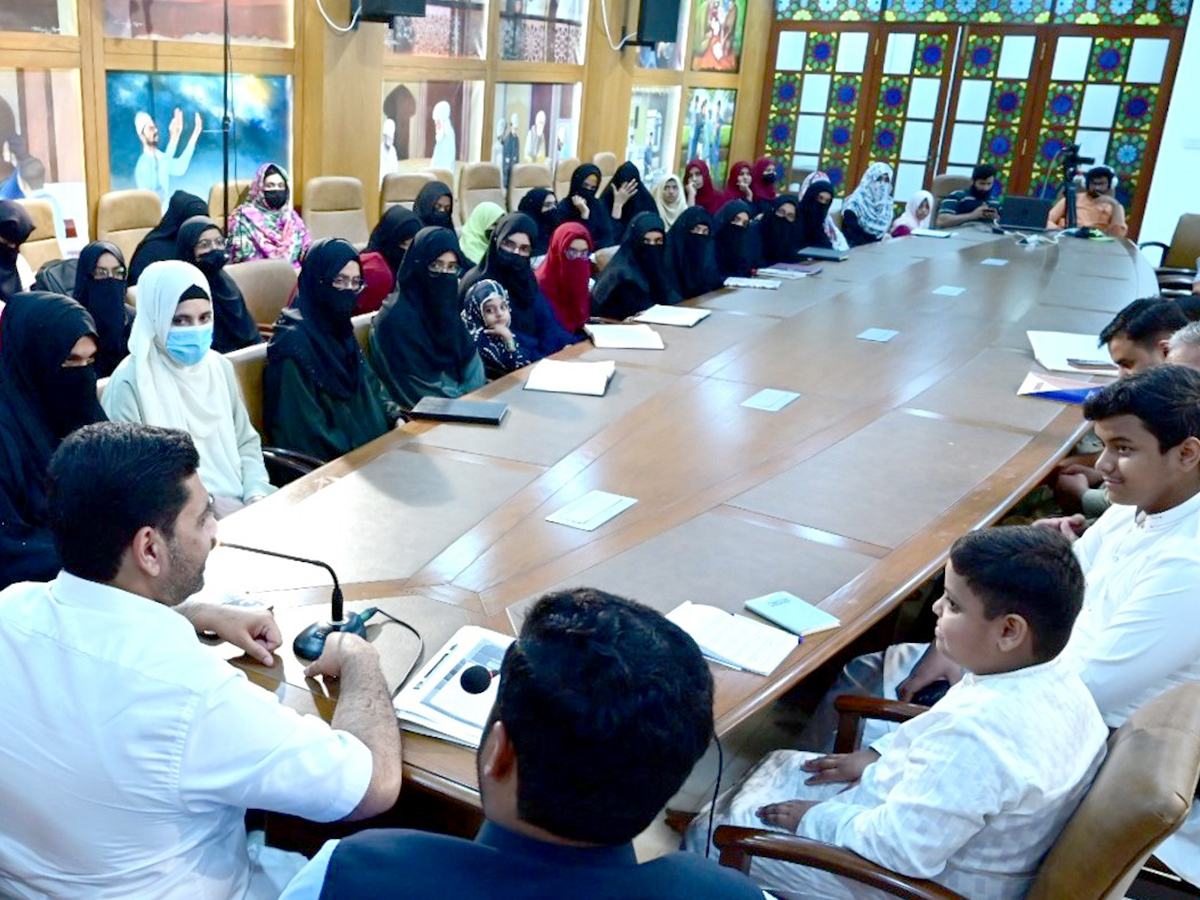
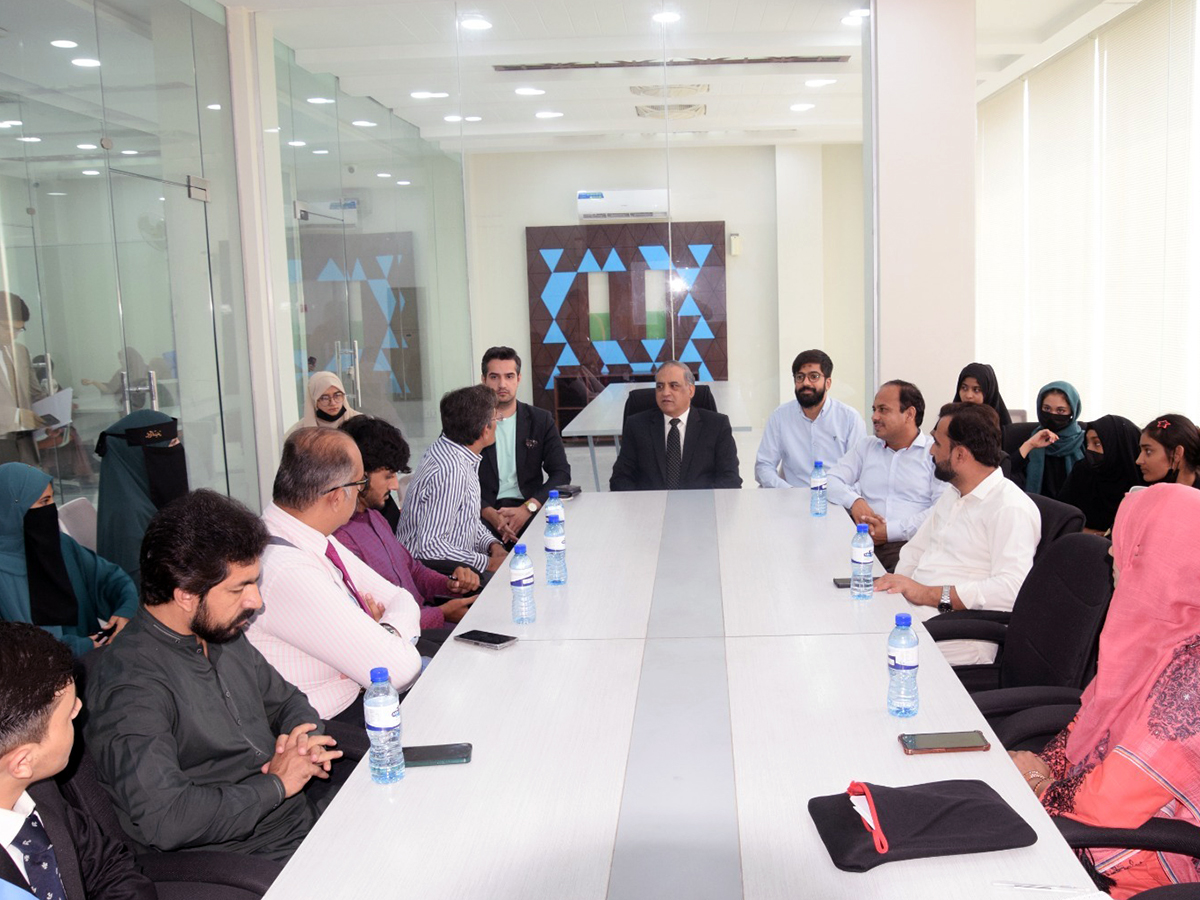
Organized by: School of Arabic Language and Islamic Sciences, Minhaj University, Lahore
Date: December 20, 2025
Conference Preface:
Arabic, the language of the Noble Qur’an and the foundation of Islamic sciences, stands as the vital bridge connecting the Ummah’s heritage with its present. It serves as an essential pillar for understanding the sacred texts and deriving rulings from them. In the contemporary era—with its diverse cultural challenges—the role of the Arabic language becomes ever more significant in safeguarding Islamic identity and strengthening civilizational communication.
The purpose of this international conference is to explore the depths of the shared heritage between the Arabic language and the Islamic sciences, to examine ways of developing their methodologies in accordance with contemporary needs, and ultimately to open new horizons for scholarly and educational research in this field.
Conference Objectives:
- To highlight the pivotal role of the Arabic language in preserving and transmitting Islamic sciences throughout the ages.
- To analyze the contemporary challenges facing the Arabic language and the Islamic sciences, and to propose practical solutions.
- To promote integration between linguistic and Shari‘ah studies within educational institutions.
- To encourage scholarly research aimed at enabling linguistic and Islamic sciences to keep pace with modern requirements in service of the Ummah’s needs.
- To strengthen cooperation between researchers and academic institutions in formulating a shared future-oriented vision.
Conference Themes:
- Theme One: Arabic Language and the Foundations of Islamic Sciences
- The role of the Arabic language in understanding the Qur’an and its sciences.
- The role of the Arabic language in understanding Hadith and its sciences.
- The role of the Arabic language in understanding Fiqh and its principles.
- The significance of mastering Arabic for comprehending and deriving Shari‘ah rulings.
- Theme Two: The Arabic Language and Contemporary Challenges
- The impact of the languages of advanced nations on Islamic identity.
- The influence of foreign civilizations on Islamic identity.
- Contemporary challenges in teaching Arabic to non-native speakers.
- Modern curricula and methodologies in teaching the Arabic language.
- Theme Three: Renewal and Future Vision
- Employing artificial intelligence in the service of the Arabic language and Islamic sciences.
- Employing artificial intelligence in the service of the Arabic language and Islamic sciences.
- Utilizing digital platforms to support the Arabic language and Islamic sciences.
- Developing integrated curricula bridging Arabic language and Shari‘ah sciences.
- Translating scientific works to and from Arabic and its impact on the development of the sciences
- Theme Four: The Role of the Arabic Language in Bridging the Gap Between Arab Civilization and Other Civilizations
- The role of the Arabic language in achieving civilizational communication among peoples.
- Commonalities between Arab civilization and other civilizations.
- Documenting the interplay manifested between Arab civilization and other civilizations.
- A visionary plan to extend a bridge of communication between Arab civilization and other civilizations.
- Theme Five: Comparative Studies
- The interaction between Arabic and foreign languages in transmitting Islamic heritage.
- Successful experiences in teaching Arabic to non-native speakers.
- The close connections between Arabic and Urdu languages.
- Modern administrative methods in managing institutions for Arabic language education
Conference Leadership:
Conference Supervisor:
Dr. Hassan Mohi ud din Qadri, Chairman of the Supreme Council of Minhaj-ul-Quran International.
Conference Chair and Vice Chair:
Prof. Dr. Sajid Mahmood Shehzad, Vice Chancellor of the Minhaj University Lahore. and Mr. Khurram Nawaz Gandapor, Secretary General of Minhaj-ul-Quran International.
For Details:
+923214874509
+923486616883
+923461664194
Arabic, the language of the Noble Qur’an and the foundation of Islamic sciences, stands as the vital bridge connecting the Ummah’s heritage with its present. It serves as an essential pillar for understanding the sacred texts and deriving rulings from them.